
DCO
What is DCO?
DCO, or Dynamic Creative Optimisation, is a feature that enables the dynamic fetching and updating of components within a banner.
For example, we have a banner advertising a product that is currently on sale.
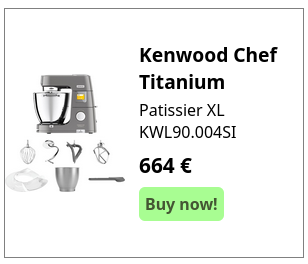
- Title
- Product description
- Order button
- CTA
- Pricing information
- Special offer information
- Product Image(s)
- Company Image
With a regular banner, if any part needs to be changed, it must be done manually. This can be achieved by either creating a new banner or accessing the creative and updating it.
WithWith DCO, these fields can be linked to a feed, enabling automatic updates. For example, the price of a product changes. This change is implemented in the feed, which then updates the banner automatically.
If the title of the advertisement is changed, it can also be updated via the feed without requiring manual intervention.
Changes can also be made based on contextual or audience information. Let’s say a user sees this banner in Europe. They do not need American financing options. Since we know that this user is from a European country, we can automatically update the banner they see with information from the feed.
A simple example of DCO is the automatic rotation of multiple product banners on a single position, which creates a product carousel:
DCO is used to change banner content based on context, audience and up-to-date product information. It enables the automatic assembly and updating of various banner elements, such as images, headlines, and calls to action, to create and deliver personalised ad creatives in real time.
This can significantly reduce the workload for AdOps by decreasing the number of manual actions required to keep banners up to date and reducing the number of banners that need to be set up in the first place.
Targeting can also be taken into account. If a user has shown interest in a specific product category, the feed can assemble banners based on that category, even if the user is viewing other products (provided the user has granted consent or is logged in). This means that all products and information can be bundled into one feed and displayed to the user based on either known audience information or contextual page information..
Furthermore, feeds can take external information into account. For example, if you want to display a banner advertising barbecues in the summer, but only when it’s relatively sunny, you can connect the feed to a weather service to ensure that BBQ-related banners are only displayed when the conditions are right.
Information about stores, such as their location and stock levels, can also be connected to the feed. This ensures that products that aren’t available at a particular store aren’t shown.
How does DCO work?
A DCO setup consists of two parts:
- One or more product feeds
- An HTML5 or an Advar creative
Advertisers can administer the feed either by syncing a custom feed to Adhese locally every time it is updated or by hosting files directly on Adhese.
When someone visits a site with inventory connected to a DCO campaign, our Content Delivery Network (CDN) system will display banners based on up-to-date information synced from the advertiser's feed.
To give an example setup related to the feed shown above, we have three items in a Product Feed format:
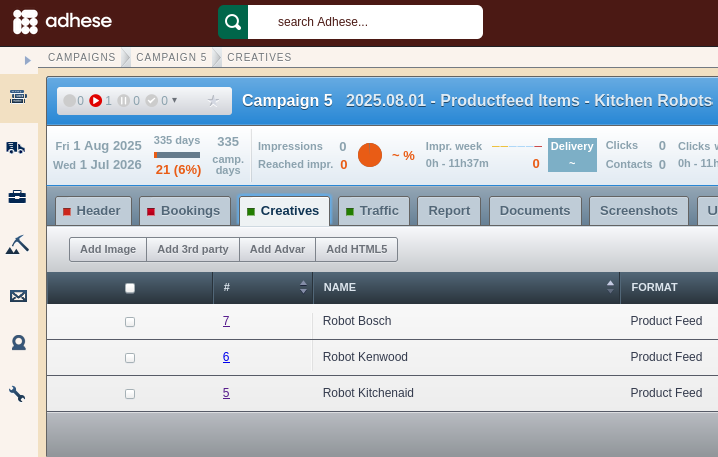
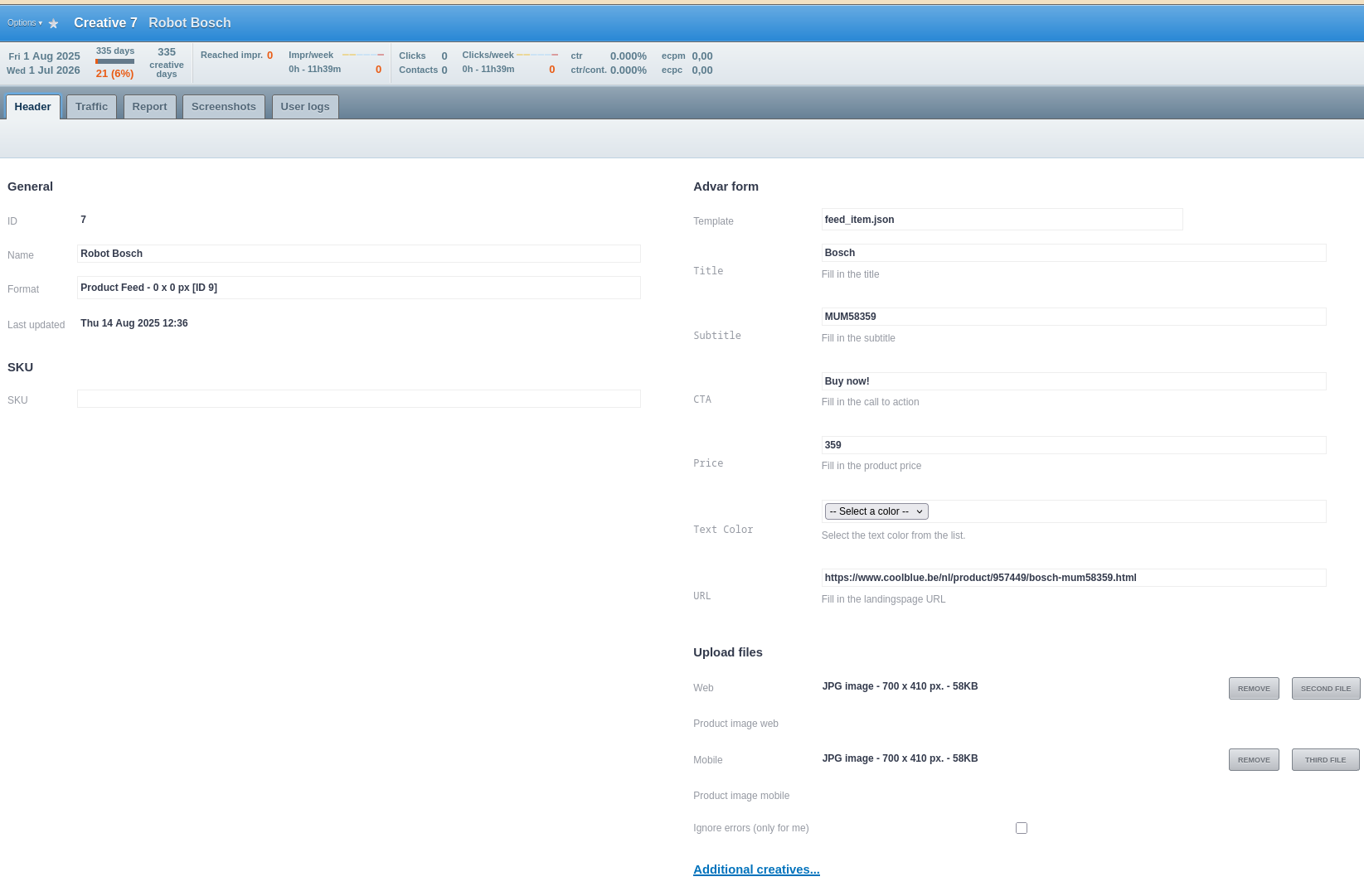
These creatives are defined by an Advar template that contains elements such as the image, call to action (CTA) and price.
In a second campaign, we have a product carousel creative that links to these three feed items:
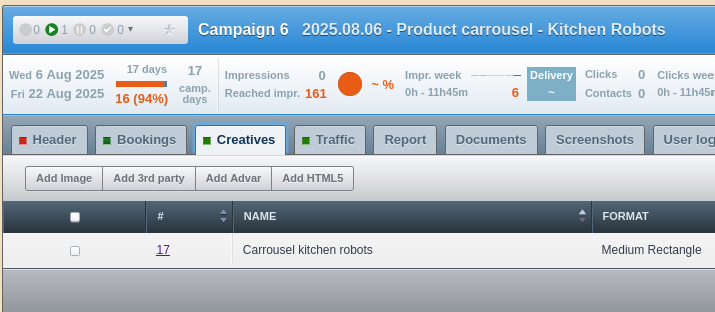
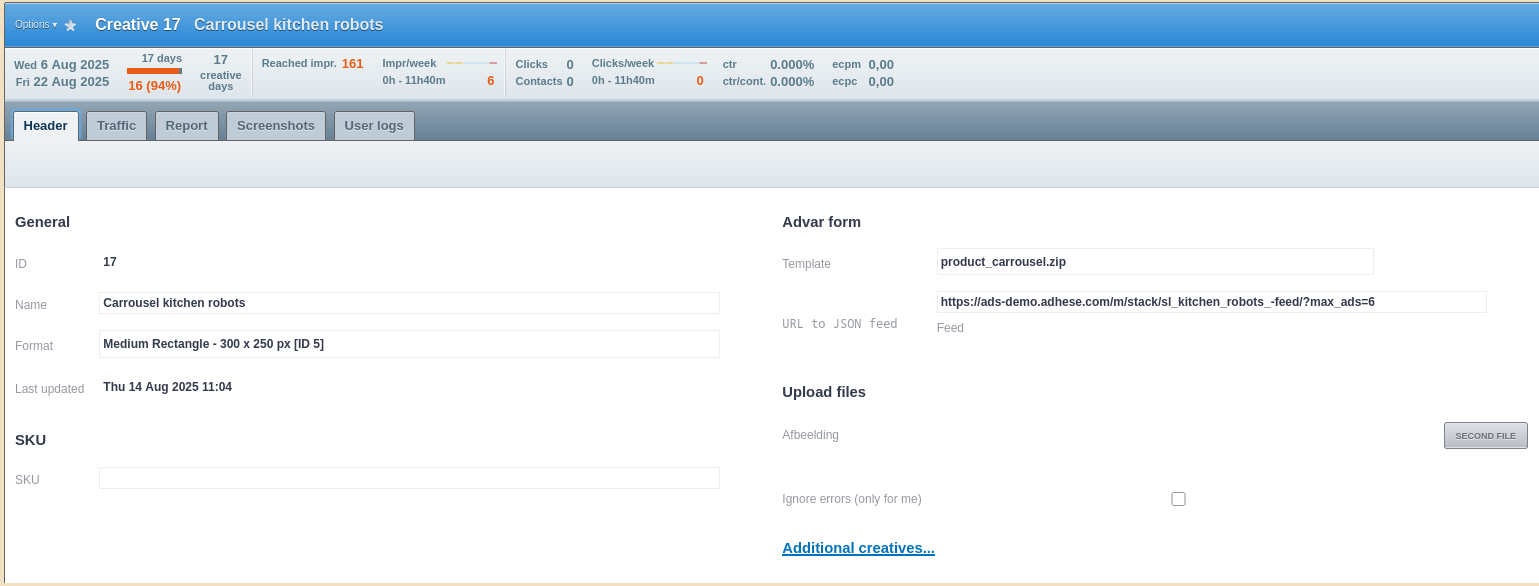
And this carousel is what's displayed on the actual position. Every time one of the feed items is updated, the carousel will change accordingly.
If you would like to implement a DCO banner either on Adhese or on your own CDN, please contact support.
Reporting
As always, the default reporting on campaign, booking and creative levels is available in Adhese.
For more granular reporting on DCO banners, custom reporting with custom trackers can be set up using BQ/Looker Studio. With this, we can take into account information such as:
- Product ID
- Pricing
- Codes
- Etc…